Jump to:
Imam Tom Live
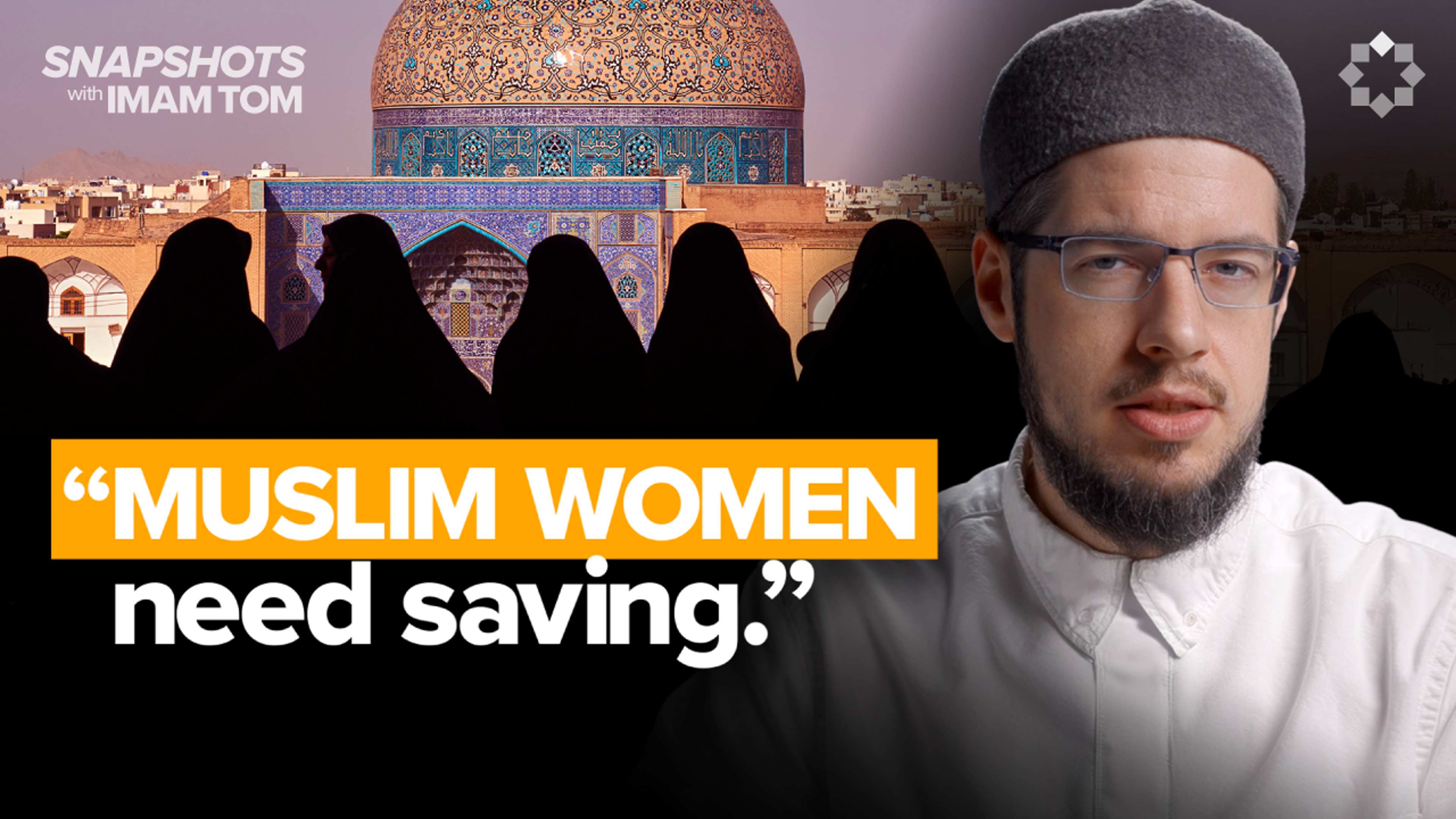
Debunking the Myth of the ‘Oppressed Muslim Woman’ | Snapshots with Imam Tom Facchine
One of the oldest accusations in the books, “Islam oppresses women,” is built on stereotypes, cherry-picked Qur’anic verses, and political propaganda. So, why does this claim refuse to die? Imam Tom breaks down the Islamophobic argument to show who really benefits from this lie and what Islam actually says about Muslim women.
This transcript was auto-generated using AI and may contain misspellings.
One of the oldest accusations against Islam is that it oppresses women. It's a claim pushed by pundits, politicians and self-appointed experts on Islam. But the
accusation rests on mere stereotypes, cherry-picked verses from the Qur'an and a deep misunderstanding of how Islamic law actually functions. Today we're going to clarify what Islam teaches about women, where Islamophobes
get their false ideas and why some people benefit so much from portraying Islam as anti-woman. Islam teaches that men and women share the same spiritual worth, the same moral responsibility and also the same capacity for righteousness.
Allah says in the Qur'an [Al-Hujurat 49:13], The most noble of you in the sight of Allah is the most righteous. Not men, not women, not the richest, not the strongest. It's the most righteous and that is
something that is open to everybody. Women in Islamic law have the right to own property and wealth independently. They have the right to consent to their own marriage. They have the right to seek divorce under defined conditions and
they have the right to inheritance. And all of these rights were guaranteed at a time when in Christian Europe they were treated just like property. They weren't even considered legal persons. These are classical Islamic rights recognized by
scholarship, recognized by courts, recognized by Muslim societies for over a thousand years. Islam does however distinguish between roles and responsibilities for men and women. It doesn't pretend that men and women are
identical. But distinction is not oppression. Every legal system recognizes distinctions. What matters is justice, dignity and accountability. And Islamic law's record is far more protective of women than the cultures that are
criticizing it. So where do these ideas come from? Critics of Islam, they rarely study Islam. They rarely speak Arabic. Instead they rely on flawed sources. We're gonna go over just three. One, cultural practices that are mistaken for
Islamic law itself. Whether that's forced marriages or honor killings, these things have no basis in Islamic scripture. They're pre-Islamic cultural values and we could say cultural abuses that Islam tried to actually eliminate. But critics
often treat these local problems as representing Islam itself, ignoring that Muslim scholars across the world condemn them. The second is selective readings with zero legal literacy. Islamophobes isolate one verse. They rip it from its
context, from its legal methodology. They ignore the Prophet's commentary upon it (ﷺ). And they read everything through a modern Western lens. They quote without understanding how context or juristic procedures shape
rulings and how they're carried out. It's the same as if someone were to take one line out of the Constitution, ignoring the Supreme Court and declaring yourself a constitutional expert. The third is bigoted propaganda, recycled since
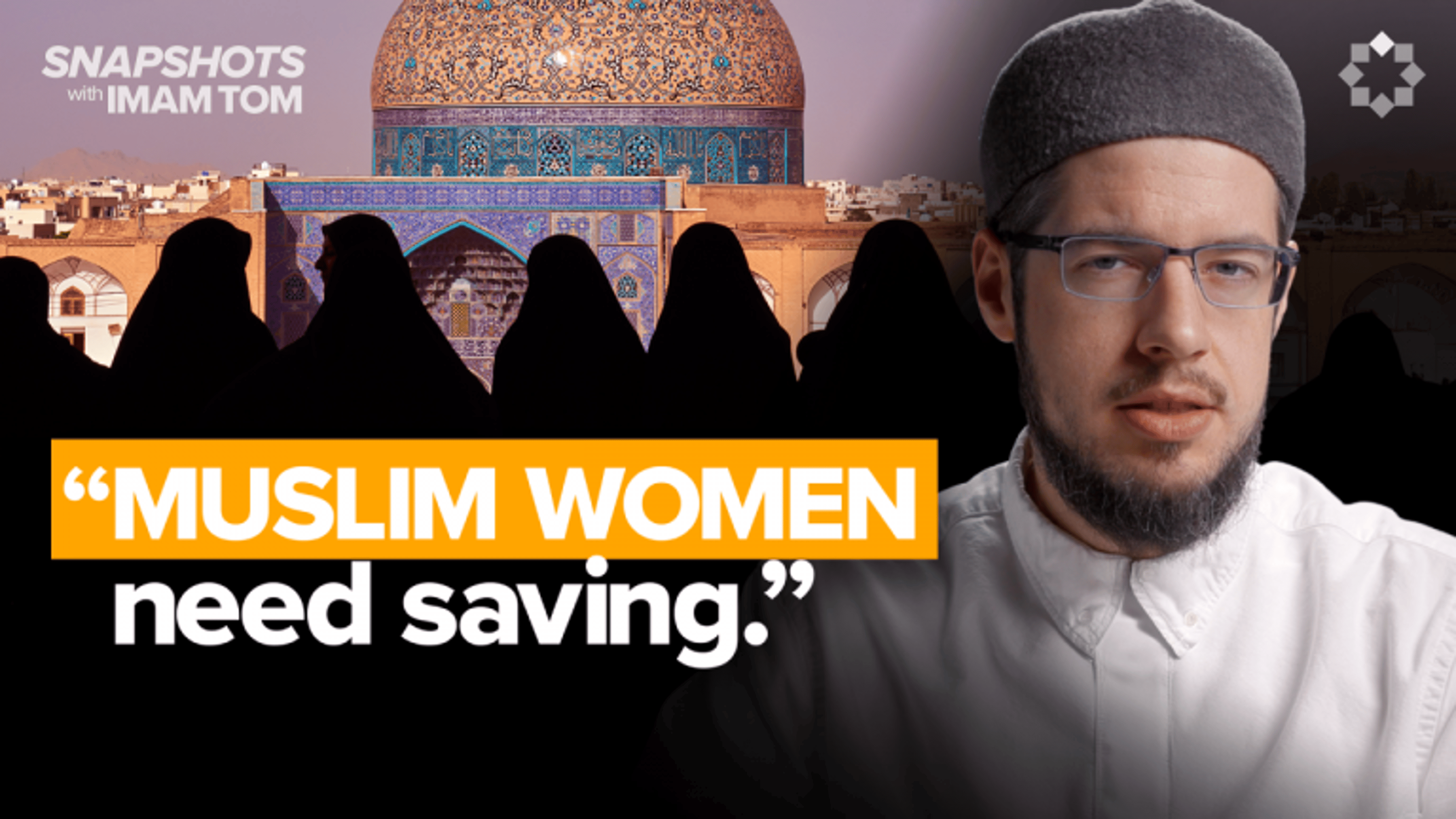
colonial times. European colonial powers, they spread the myth that Muslim women need saving to justify invasion and domination. Today's anti-Islamic propagandists, including Zionists and Israel first influencers, they recycle
the same tactic. They say that Islam is backwards, that it's violent, that it's anti-woman in order to rationalize discrimination and surveillance. None of this comes from Islam. It comes from politics. So what do people benefit by
spreading these lies? Painting Islam as anti-woman accomplishes three goals for their opponents. One, it delegitimizes the entire faith. If Islam is inherently oppressive, then anything that Muslims say about war, about justice, about
Palestine, about human rights, it can be easily dismissed as coming from some immoral backwards person. This is whataboutism. Oh, well you want to talk about Palestine? Well what about how you treat your women? We've seen this
actually unfold during the genocide of the last two years. Two, is that it justifies foreign policy and military intervention. For centuries, empires have claimed that they are saving Muslim women while bombing, occupying, and
destabilizing Muslim societies. It's a propaganda strategy dressed up as a moral concern. Three, it keeps Muslim women as props instead of participants. Islamophobes don't actually care about empowering Muslim women. If they did, they
would support Muslim women's religious freedom and their safety and their dignity, not banning hijab or banning mosques or trying to restrict immigration. Their goal isn't liberation, it's actually control. So what do Muslim women's
voices actually say? Here's the part that critics always ignore. Muslim women themselves, the great majority of them, whether scholars or activists or lawyers, the mothers, the students, they consistently say the same thing. Islam
gives me dignity, not oppression. They find empowerment in the Qur'an's recognition of their intellect, of their piety, and of their agency. They know that modesty is not the same thing as degradation. They know that marriage is
not the same thing as ownership, and they know that limitations are not misogyny. Islam gave women rights when the rest of the world denied them even personhood. Islam still gives meaning, structure, and empowerment to millions, if not 1 billion,
women of the world today. So the next time someone says that Islam oppresses women, ask them, which Islam are you talking about? Are you talking about the Islam of the Qur'an or the Prophet (ﷺ), or the Islam that's
invented by pundits and politicians or online conspiracy theorists? Because the truth is simple, Islam honors women. Islamophobes distort Islam to justify their own agenda, and real empowerment comes from understanding, not from
propaganda.