fbpixel
Srebrenica Massacre Explained: Europe’s Muslim Genocide
Explained

Srebrenica Massacre Explained: Europe’s Muslim Genocide

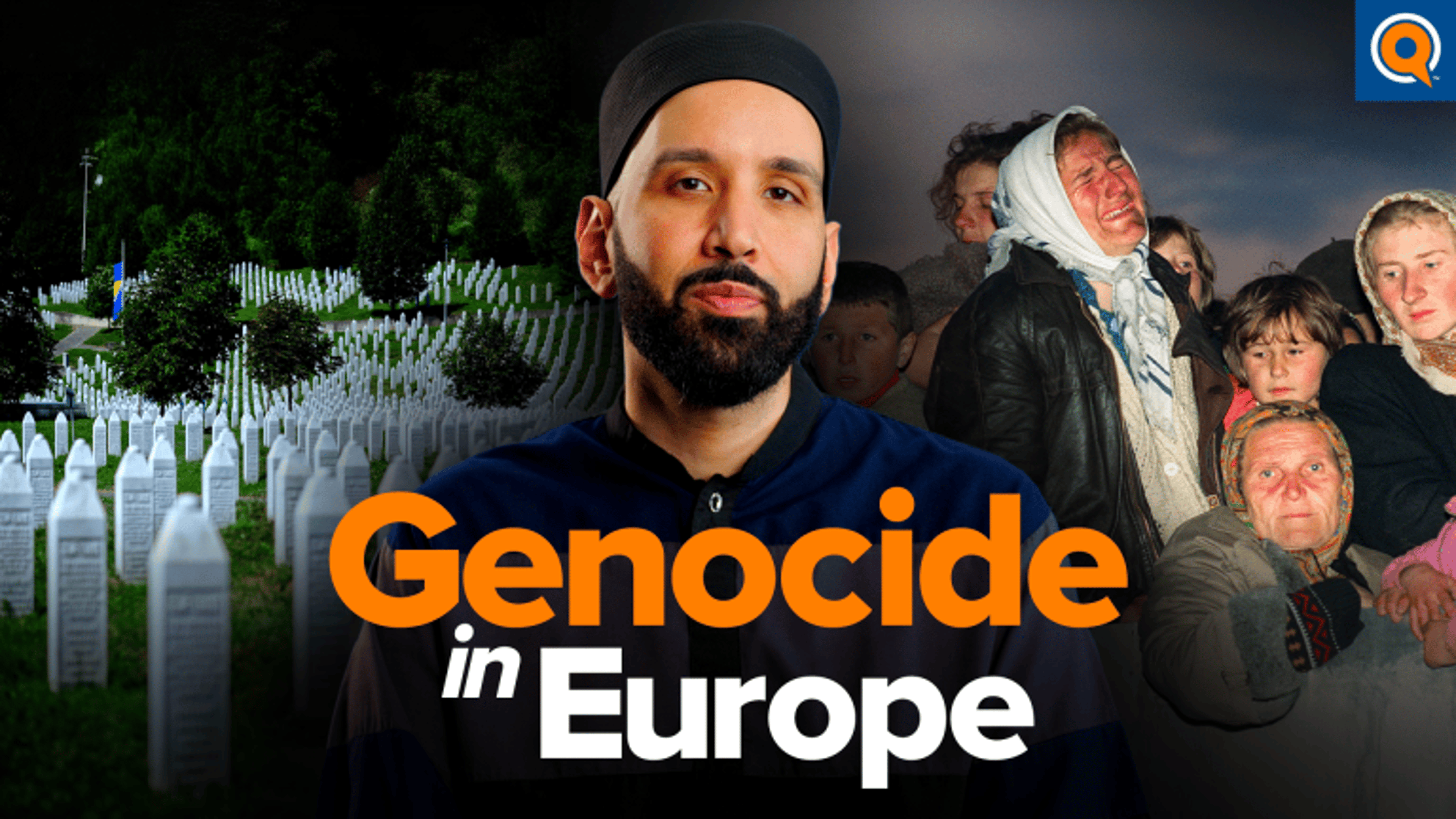
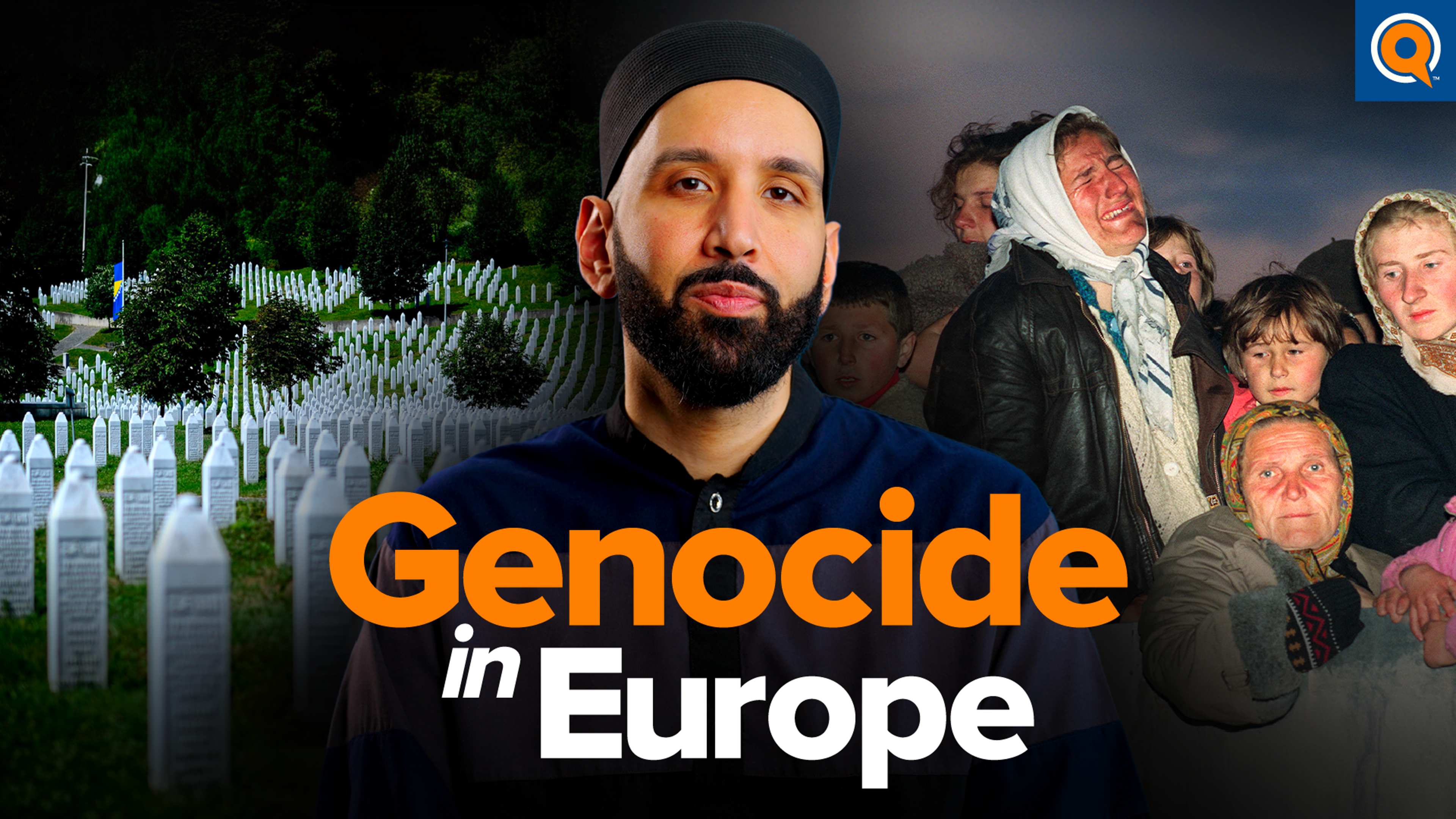
On the 29th anniversary of the Bosnian Genocide, which saw the brutal killing of over 8,000 Bosniak Muslims by a Serbian nationalist militia, Dr. Omar Suleiman reflects on the dehumanization that precedes genocide. He poses a crucial question: Would the victims have faced the same fate if they had not been Muslim?

This transcript was auto-generated using AI and may contain misspellings.
When I was 12, I saw all my family, my father and my uncles, shot right in front of me. They were shot right in front of my house, and the people who did it still live in my city. This may sound like Gaza today, but it's actually Srebrenica.
The genocide that occurred in Srebrenica 29 years ago this week, when some 8,000 mostly Muslim Bosniaks were killed by a Serbian nationalist militia, was the largest genocide
Europe has seen since the Holocaust. But it didn't come out of nowhere. In the three years leading up to the genocide, an estimated 100,000 people were killed, 80% of whom were Bosniaks.
Mushkit Hara has three children. They were all shelled last week and her husband is dead. Two sisters hit by shrapnel. Their parents were both killed by shellfire in Gornish Polya.
Hata on the right has lost a leg. Surgeons working around the clock have operated on 60 people so far. This girl has been living off crumbs. Today there is near global consensus that there was in fact a genocide in Srebrenica.
And today we're seeing it in Gaza. And in an information overload world, we're inundated with the news of casualties and tragedies every day. 10 killed here, 25 killed there,
700 killed there, a hospital bombing here, a UN school destroyed, a whole family tree wiped out, seven-year-old Hind Rajab's car shot 355 times. Understanding how genocide unfolds means
remembering how the systematic dehumanization of a people is what permits it in the first place. It doesn't happen in one day. It takes sustained neglect of a fellow human's plight,
degradation and humiliation. Women, children and the old packed in so tight many were struggling to breathe. There were numerous stops. The refugees were so hungry and thirsty they were begging us
for snow. Suddenly a tailgate broke open and women and children spilled onto the road bringing yet more misery. Bringing down the sides of the lorries revealed the full extent of the suffering
these people had gone through to escape the horrors of Srebrenica. One elderly man died on the way. Some will never remember what they went through to reach safety. Others are unlikely ever
to forget. Would the victims of the Srebrenica genocide have been brutally massacred if they weren't Muslim? Despite their location in Europe and their Caucasian identity, Muslim Bosniaks were
demonized, dehumanized and consequently assigned for slaughter precisely because of their Islam. Post-World War II decolonization had already normalized the third world Muslim victim of Africa
and Asia. But in Europe itself, only a few decades separated from the Holocaust, Europeans were boasting that they had already left the savagery of the past behind. Insert Islam however and the
Bosniak Muslim is automatically transformed into a natural casualty. After seeing the aftermath of 8,000 men and boys brutally slaughtered, it begs the question, did being Muslim alone potentially
disqualify one from being considered European or even human? You can go today to the video store in Belgrade and take out the videos. In my home city which is today in the Serbian part of Bosnia.
This testimony from 1995 might as well have been from 2024. The Bosnian genocide happened before social media, before widespread internet access, before a smartphone world. Vance describes the job
as one of the toughest in the world, underlined by the refugee crisis in Tuzla and elsewhere, where the orphanages are overfilled with young victims like these from Srebrenica.
Now as a genocide unfolds in Gaza on our phones, TVs and tablets, what's our excuse? We know in real time as victims are murdered in cold blood. We see the bodies of lifeless Palestinian children.
We observe the death toll increase every single day. In many ways it seems like the information overload at our fingertips has done little to stop the killing. Nine months on and Israel's
undeterred genocide in Gaza continues with very little international accountability. The question is, if we can see genocide playing across our screens, what does that mean for the
world that we live in today? And how do we prevent future Srebrenicas and future Gazas from happening while still being present in the moment and stopping this genocide today? How do we avoid
statistical numbness? One in which casualty counts past and present are merely numbers, absent souls. When I visited the Srebrenica Memorial Center, I was chilled to the bone by the sheer
number of graves, most of them containing bodies or parts of bodies of Bosniak Muslims recovered from mass graves. They cover the ground as far as the eye can see. And in Srebrenica, the air itself
seems to bear witness to the genocide that took place only less than three decades ago. So many, many returning, 10 years to the day, to where so few escaped. Not just massacred,
but hurriedly buried, then methodically exhumed to be hidden in deep pits. Safe, the Serbs hoped, from the eyes of the world.
It could never have worked. And so today, a decade on, 610 bodies identified by their DNA were buried here in the mass cemetery for Srebrenica, laid to rest for a third and final time.
The difference between one casualty or two, much less 8,000, is the difference between night and day. And the most chilling display at the Memorial Center is this line of shoes in the place where
the victims were slaughtered like animals. Each pair a reminder that we must humanize the victim and bring life to the virtual. Every human being who once stood in those shoes had tried to escape
the horrific cruelty of their tormentors. The victims thought of many ways to run and hide and dreamt of walking freely without fear. They were children, parents, spouses, and siblings.
But to those who massacred them, assembly line style, they were less than insects. Now in Gaza, avoiding statistical numbness is just as important. Resist it by humanizing Hind, by humanizing the soul of our soul, Reem.
They are alive with their Lord, and they need to remain alive in our hearts.